
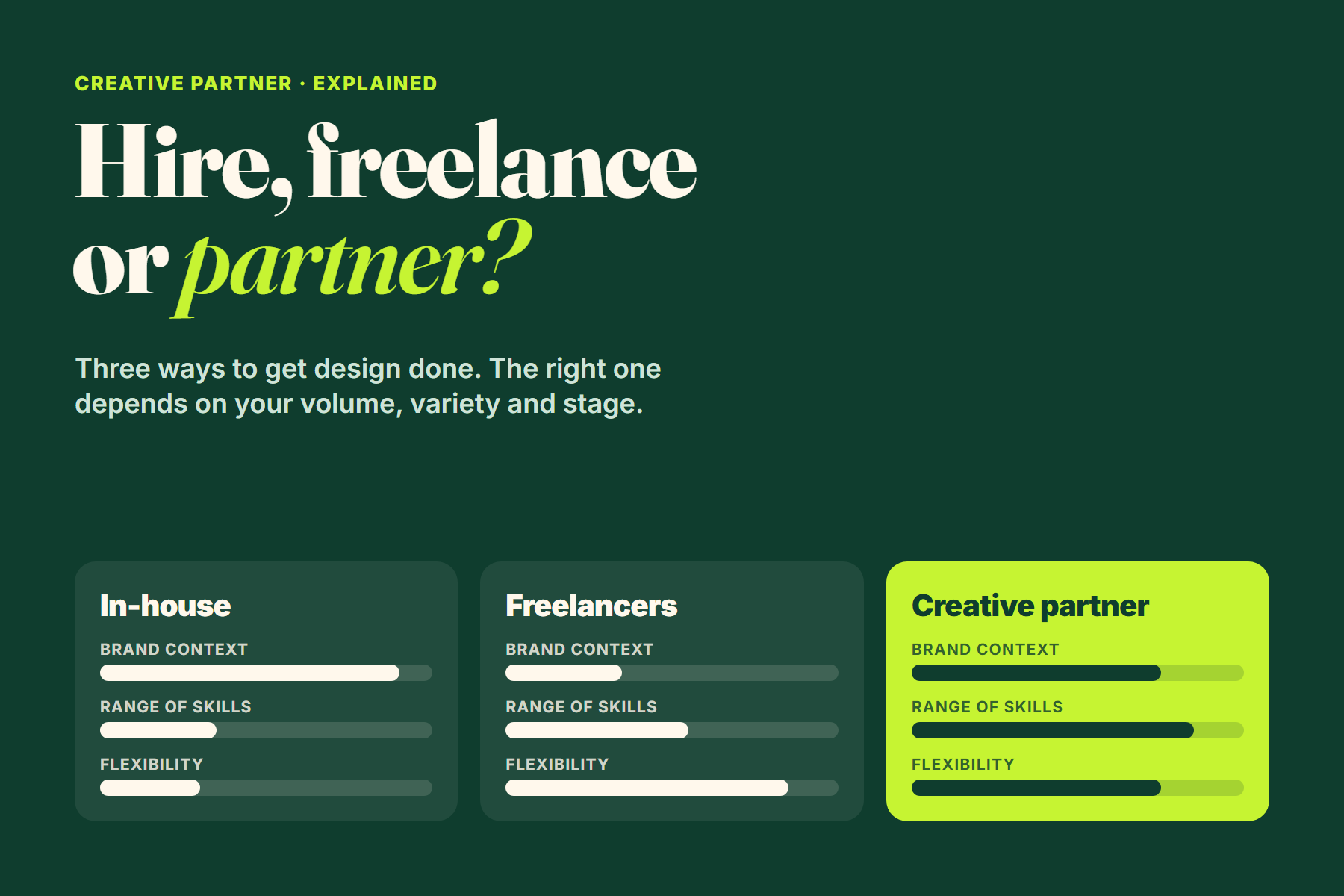
A growing brand needs a steady stream of design: social posts, campaign creatives, marketplace images, presentations, packaging updates and print material. Most businesses meet that need in one of three ways: hiring an in-house designer, working with freelancers, or engaging a creative partner on an ongoing basis.
None of these is right for every business. The best fit depends on how much work you have, how varied it is, and how much time you can spend managing it. This guide sets out the trade-offs honestly.
Consistency is the hardest thing to buy one job at a time.
Option 1: Hiring an in-house designer
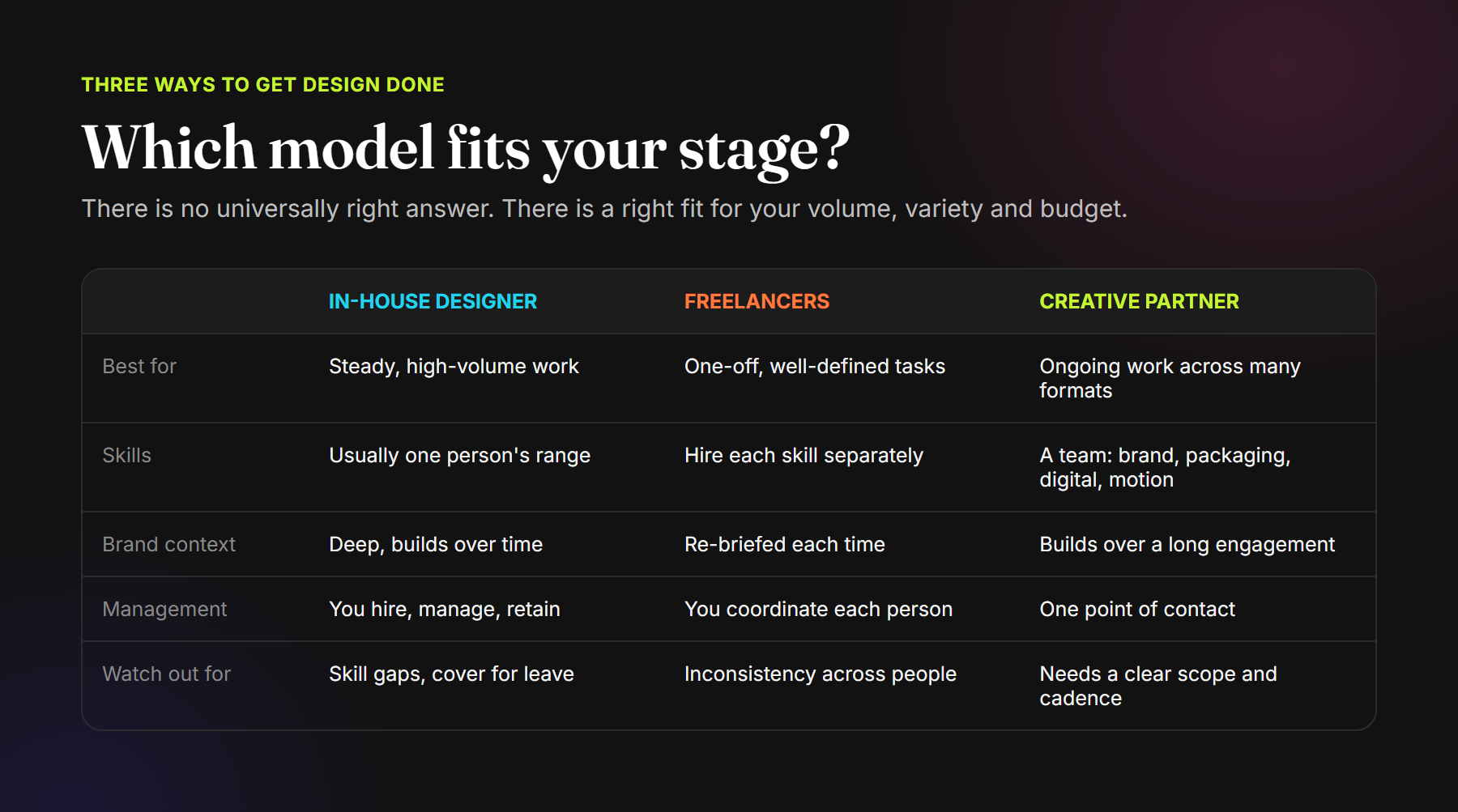
An in-house designer works only on your brand and builds deep knowledge of it over time. They are available for quick changes and can sit in on meetings where decisions are made.
- Strengths: deep brand context, fast turnaround on small tasks, close collaboration with your team.
- Trade-offs: one person rarely covers every skill well, from packaging and motion to web and presentations. You also take on hiring, management, reviews and cover for leave.
- Best for: steady, high-volume work in a fairly consistent set of formats.
Option 2: Working with freelancers
Freelancers give you access to specific skills when you need them, without a long-term commitment. For a defined one-off task, such as an illustration or a single presentation, this can be efficient.
- Strengths: flexibility, access to specialist skills, pay only for the work you commission.
- Trade-offs: each person needs briefing on the brand, availability varies, and when several freelancers work on the same brand the output often drifts apart visually. Someone on your side has to coordinate it all.
- Best for: occasional, well-defined projects.
Option 3: Engaging a creative partner
A creative partner is a studio that works with your brand on an ongoing basis, often through a monthly engagement. You get a team with a range of skills and one point of contact, and the brand knowledge builds over time because the same people keep working on it.
- Strengths: a range of skills under one roof, consistency across formats, brand context that grows, and less coordination on your side.
- Trade-offs: works best with a clear scope, a regular planning rhythm and a single decision-maker on your side.
- Best for: growing brands with ongoing work across many formats, such as social, campaigns, marketplace creative, packaging extensions and presentations.
How to decide which model fits
A few questions usually make the answer clearer:
- Volume: is there enough design work every week to keep a full-time person busy?
- Variety: does the work span many formats and skills, or mostly the same few?
- Management time: who on your team will brief, review and coordinate the work?
- Consistency: how important is it that every piece looks like one brand?
- Stage: are you still defining the brand, or maintaining an established one?
Many brands combine models. A small in-house team might handle daily content while a creative partner takes on campaigns, packaging and larger projects, all working from the same brand guidelines.
How a monthly creative engagement usually runs
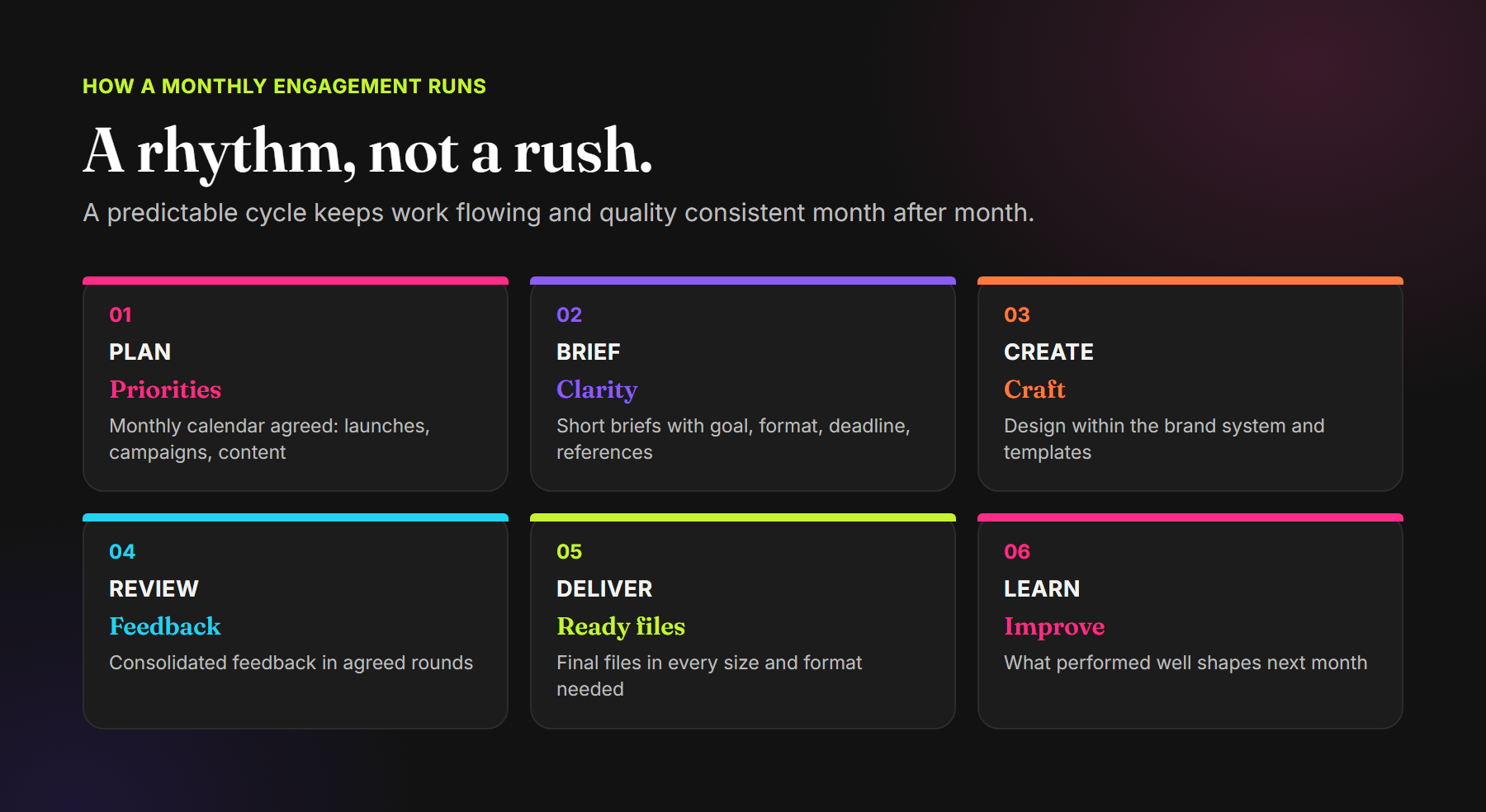
What makes an ongoing partnership work is rhythm. A predictable monthly cycle keeps work flowing without last-minute rushes:
- Plan: agree the month's priorities, such as launches, campaigns and content.
- Brief: short briefs for each piece, with the goal, format, deadline and references.
- Create: design within the brand system and templates.
- Review: consolidated feedback in agreed rounds.
- Deliver: final files in every size and format needed.
- Learn: look at what performed well and let it shape the next month.
How to get the most from a creative partner
- Share context, not just tasks: goals, results and upcoming plans lead to better work.
- Name one decision-maker: feedback from several people should be combined before it goes back.
- Keep a shared calendar: known launches and festivals can be planned weeks ahead.
- Invest in templates: good templates make everyday content faster and more consistent.
- Review the scope regularly: as the brand grows, the mix of work will change.

Frequently asked questions
What is a creative partner?
A creative partner is a design studio or agency that works with a brand on an ongoing basis, handling a range of design needs under one relationship rather than project by project.
Is a design retainer better than hiring a designer?
It depends on volume and variety. A full-time designer suits steady work in consistent formats. A retainer with a creative partner suits brands that need a wider range of skills without building a team.
Can a creative partner work with my in-house team?
Yes. Many brands pair an in-house designer for daily content with a partner for campaigns, packaging and larger projects, using shared guidelines and templates.
What should a monthly design engagement include?
A clear scope of the types and volume of work, a planning and briefing rhythm, agreed feedback rounds and delivery formats. The exact mix should reflect what your brand produces each month.
An extension of your team, not another supplier to manage.
Campaign Design · Social Media · Marketing Collateral · Packaging Extensions · Print & Digital Design · Presentation Design · Monthly Creative Support
See work for Fitleasure, Erode Marathon and Everbond, or explore our Creative Partner services.
Comments